 Walking tour
Season: Evenings, most of the year
Rothenburg night watchman tour
- Lantern-lit lanes and the life of a medieval town watchman
- Stories of plague, war and the famous Master Draught
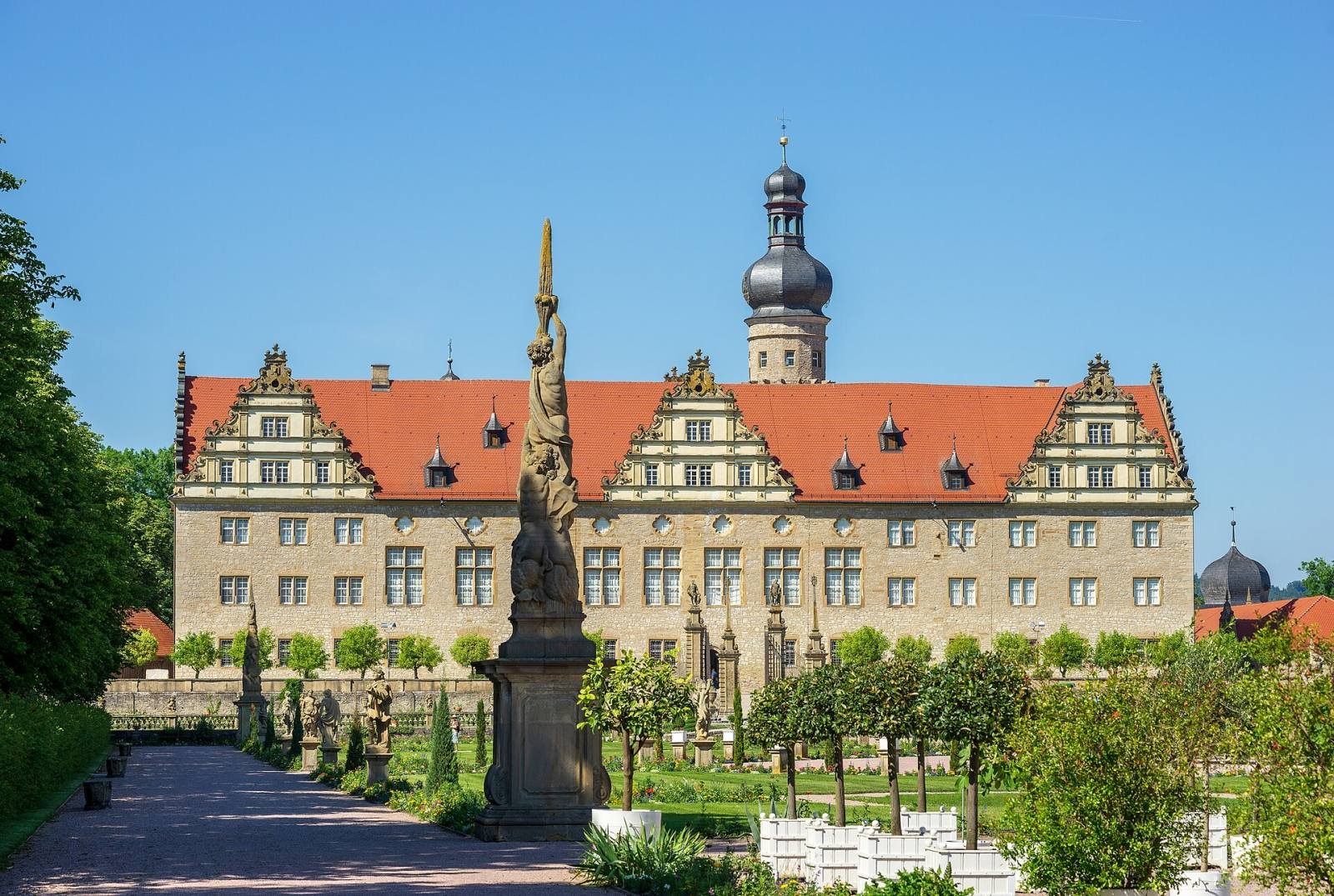
Palace
Weikersheim Palace was the seat of the Counts of Hohenlohe for centuries. Its Renaissance wings, begun in 1586 for Count Wolfgang II, surround an older moated castle, and inside is one of the great rooms of the German Renaissance: the Knights’ Hall, with a painted ceiling and life-size animals breaking out of its walls.
Weikersheim was the home of a branch of the Hohenlohe family, one of the old noble houses of south-west Germany. Count Wolfgang II rebuilt the castle as a Renaissance palace from 1586, and his descendants furnished it in the Baroque style in the 18th century. Because the court later moved away, much of the palace was never modernised, and its rooms have kept their old character. Since 1967 it has belonged to the state of Baden-Württemberg.
The Rittersaal, or Knights’ Hall, is the reason most people come. It is a huge hall with a coffered ceiling painted with hunting and battle scenes, and around its walls are life-size stucco animals, stags, boars and other beasts, some with real antlers, that seem to burst out of the walls. A towering carved portal stands at one end. It was completed around 1603 and is one of the finest Renaissance rooms in Germany.
Book ahead
Walking tour
Season: Evenings, most of the year Palace tour
Season: Year-round
 Walking tour
Season: Year-round
Nearby
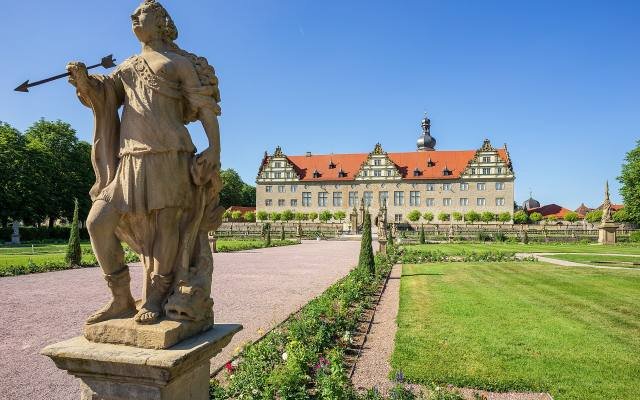 Garden
A Baroque garden, almost unchanged
One of the best-preserved Baroque gardens in Germany, with the Hercules Fountain, statues of gods and seasons, a gallery of stone dwarfs and the orangery overlooking the Tauber valley.
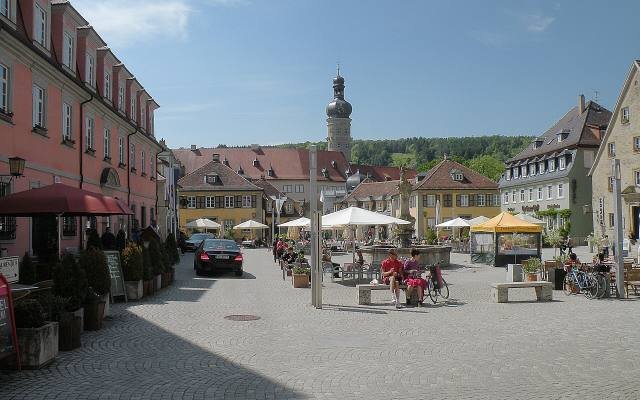 Old town
The palace forecourt
A curved Baroque square that leads to the palace gate, with the late Gothic town church of St George, cafés, wine taverns and the Tauberländer Dorfmuseum of rural life.
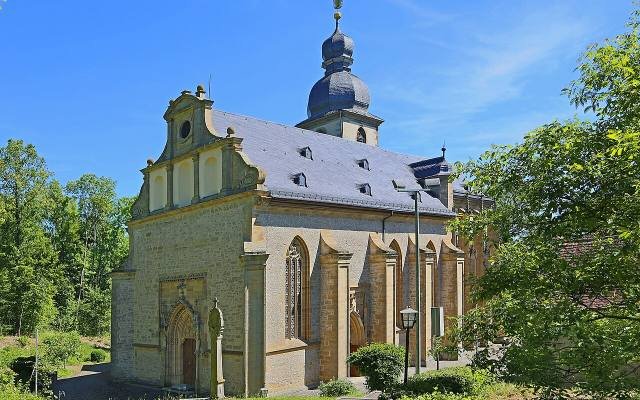 Church
A pilgrimage church in the hills
A late Gothic pilgrimage church on the hillside above Laudenbach, a village of Weikersheim, with the grand tomb of Melchior von Hatzfeldt, an imperial field marshal of the Thirty Years’ War.